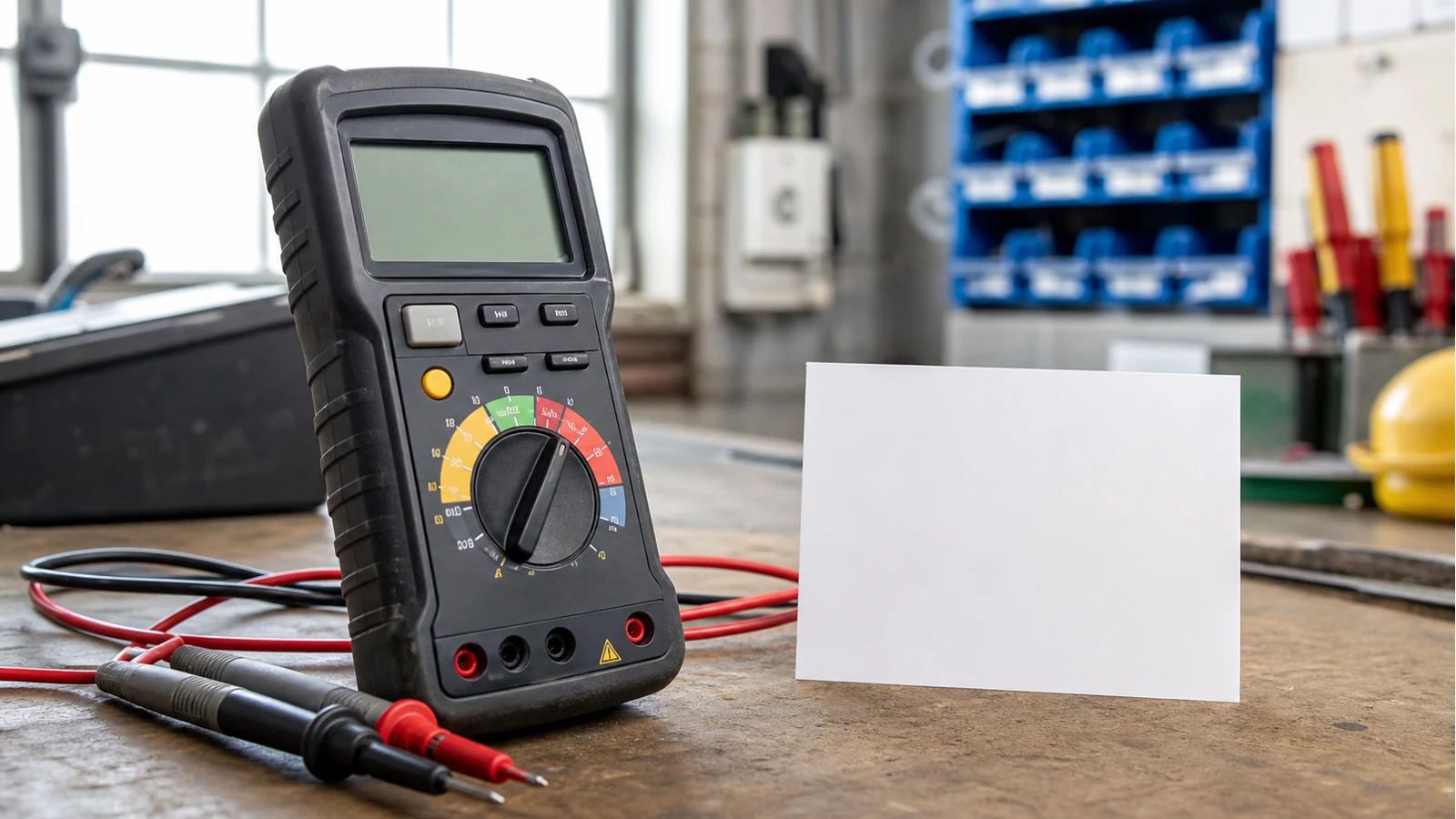
Bs 7671 Insulation Test Voltage 250V 500V 1000V UK
Direct answer: for UK installation insulation resistance work, choose the DC test voltage by the circuit and the equipment left connected. Public BS 7671 guidance points to 250 V for SELV and PELV circuits, 500 V for many circuits up to and including 500 V, and 1000 V for circuits above 500 V. Where surge protection devices or connected equipment affect the test, a 250 V approach may be used only in the limited way described by current guidance, not as a casual shortcut.
The practical risk is simple: too low a test voltage can hide weakness, while too high a voltage can stress electronics that should have been disconnected or protected. The IET inspection and testing FAQs are the public place to check the current wording and caveats before treating any summary as the rule. A trade summary such as the Elec-Mate BS 7671 insulation resistance guide is useful for quick orientation, but the duty-holder should still work to the latest standard, the certificate being issued and site procedures.
Decision Table
| Situation | Typical DC test voltage | Reader action |
|---|---|---|
| SELV or PELV circuits | 250 V | Confirm circuit type and connected equipment before testing. |
| Typical 230/400 V installation circuits up to and including 500 V | 500 V | Disconnect or protect sensitive equipment, then record the stable reading. |
| Circuits above 500 V | 1000 V | Check design documents and competence limits before applying the test. |
| SPD-connected or equipment-sensitive circuits | May require 250 V retest conditions | Follow current BS 7671/IET guidance rather than forcing a standard test. |
Do Not Use Table Minima As A Motor Health Target
Installation verification and motor condition monitoring are related, but they are not the same job. A plant engineer trending a motor winding wants baselines, timed readings and change over time. A contractor completing installation verification is checking a different compliance question. If you are building a practical test sequence, pair this voltage decision with a dead-test workflow like the UK insulation resistance test checklist.
When 1000 V Matters
A 1000 V range is useful when the circuit, asset or commissioning requirement calls for it. It is not a badge to apply everywhere. On long commercial runs, charge time, length and safe discharge discipline matter as much as the headline voltage; that is covered in the long cable commissioning guide.
Sources
- IET BS 7671 inspection and testing FAQs
- Elec-Mate guide to BS 7671 insulation resistance testing