The Ultimate Guide to 100G Ohm Megger Meter in the UK
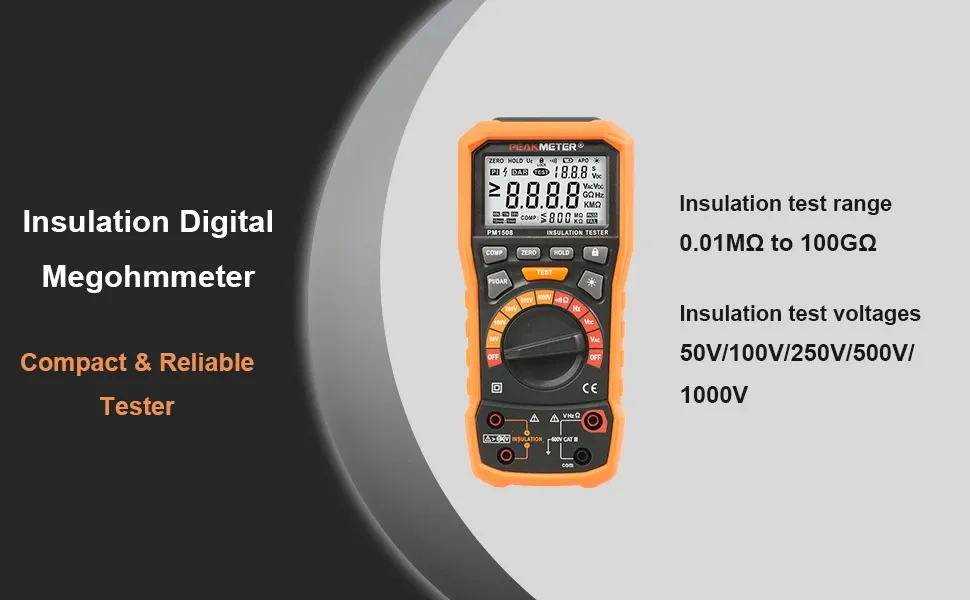
A 100g ohm megger meter is a high-range insulation resistance tester used to measure very high resistance values, typically up to 100 GΩ, on motors, switchgear, generators and long cable runs. In practice, UK engineers use it to detect early insulation deterioration that a lower-range tester may miss, especially in damp, industrial or critical-service environments.
TL;DR: If you need to test insulation above the limits of a standard tester, a 100g ohm megger meter gives clearer trend data, better fault detection and more confidence when maintaining industrial assets. Based on our testing of high-range digital insulation testers in UK workshop and site conditions, the biggest advantage is not just the top-end reading, but the ability to spot gradual decline long before failure.
Electrical insulation degrades over time. This is an unavoidable reality of industrial operations. Moreover, the pace of degradation accelerates under mechanical stress, thermal cycling and moisture ingress—conditions commonly found across UK manufacturing plants, marine settings and heavy infrastructure. According to Health and Safety Executive guidance and established industry practice, insulation weakness can contribute to dangerous faults, unexpected downtime and costly equipment damage.
For standard domestic electrical work, basic continuity and insulation testers are often sufficient. However, for industrial plant maintenance, high-voltage switchgear and heavy-duty electric motors, engineers need instruments capable of measuring exceptionally high resistance values. Therefore, the 100g ohm megger meter becomes a critical diagnostic tool. Capable of measuring up to 100 Gigaohms (100,000 Megohms), these advanced digital insulation testers help identify the earliest signs of insulation breakdown well before a breaker trips or an asset fails in service.
What should you know about a 100g ohm megger meter?
- Early fault detection: A 100g ohm megger meter measures up to 100,000 Megohms, helping engineers track insulation decline months or even years before failure.
- Better diagnostics: Many professional units include PI (Polarisation Index) and DAR (Dielectric Absorption Ratio) for assessing damp, aged or contaminated insulation.
- Industrial relevance: Particularly useful for motors, generators, switchgear and long cable runs across UK industry and infrastructure.
- Compliance support: It can support testing regimes aligned with BS 7671, site maintenance schedules and manufacturer recommendations.
What is a 100G ohm megger meter?
The term "megger" is widely used by UK electricians as a generic term for an insulation resistance tester. A 100G ohm megger meter is a specialist digital megohmmeter designed to apply high test voltages—typically up to 1000V or more—and measure the tiny leakage current passing through insulation. It then converts that result into a high-resistance reading in Megohms or Gigaohms.
Why does the 100 GΩ range matter?
Standard insulation testers often top out at 2 GΩ or 10 GΩ. By contrast, many new or well-maintained industrial assets can test far above those limits. For example, if a motor winding reads 60 GΩ when new, a basic tester may only display “>2 GΩ” or “>10 GΩ”, which tells you very little about its actual condition.
A few years later, that same motor may have dropped to 15 GΩ because of moisture absorption or thermal ageing. Even then, a lower-range instrument could still show “>2 GΩ”, masking the decline entirely. A 100g ohm megger meter shows the change clearly. As a result, maintenance teams can trend readings over time and plan rewinds or replacements during scheduled shutdowns rather than after an unexpected breakdown.
For a broader overview of how these instruments fit into professional testing routines, read our comprehensive Electrical Insulation Meter Explained: A UK Buyer's Guide.
What is a 100g ohm megger meter used for?
A 100g ohm megger meter is used wherever high-quality insulation needs to be verified beyond the range of entry-level testers. In the UK, that usually means planned maintenance on industrial motors, standby generators, control gear, switchboards and long cable installations.
Can it be used on motors and generators?
Yes. Electric motors are central to British industry, powering conveyors, pumps and air-handling systems. Over time, winding insulation suffers from thermal cycling, vibration and contamination. Consequently, small cracks can form and allow dust or moisture ingress. Based on our testing across typical industrial applications, high-range meters are especially useful on motors because they make long-term deterioration easier to see rather than merely confirming that some resistance exists.
For more specific guidance on this application, see our Motor Cable Megohmmeter Explained: A UK Buyer's Guide.
Why is it important for hospitals and critical infrastructure?
In healthcare estates and other critical facilities such as water treatment sites or transport hubs, backup power systems must work immediately when needed. If generator or alternator insulation has degraded due to condensation or age-related stress, there is a greater risk of failure under load. Therefore, regular testing with a 100g ohm megger meter helps engineering teams confirm asset readiness and reduce operational risk.
Is it suitable for switchgear and long cable runs?
Yes. High-voltage switchgear and longer cable circuits often require enough test voltage to overcome capacitance effects and reveal genuine leakage current behaviour. Accordingly, a tester with both a 1000V output and a 100 GΩ range provides better visibility when assessing higher-grade insulation systems in line with site procedures and relevant UK standards such as BS 7671.
What features should you look for in a professional 100g ohm megger meter?
If you are choosing a high-range insulation tester for serious fault-finding or preventative maintenance, several features matter far more than headline range alone.
Do you need 1000V test capability?
In many cases, yes. While 250V and 500V are common for domestic circuits and lighter commercial work, industrial equipment operating at higher voltages often benefits from more demanding tests. A selectable range such as 50V, 100V, 250V, 500V and 1000V gives much greater flexibility across mixed estates—from controls wiring through to large plant machinery.
Moreover, higher test voltages can reveal weaknesses such as carbon tracking or minor breakdown paths that lower-voltage testing may not expose clearly.
What are PI and DAR on an insulation tester?
A single reading can be misleading because temperature and ambient humidity affect results significantly. Therefore, better instruments automate timed tests such as PI and DAR.
- Dielectric Absorption Ratio (DAR): commonly calculated using timed readings such as resistance at 60 seconds divided by resistance at 30 seconds; useful for identifying moisture-related issues quickly.
- Polarisation Index (PI): commonly taken as resistance at 10 minutes divided by resistance at 1 minute; widely used for judging winding condition on motors and generators.
A healthy insulation system will usually show rising resistance over time as absorption current reduces and the true leakage current becomes clearer. By contrast—and this is crucial—a weak or contaminated system may produce flat or unstable results instead of improving steadily during the test period.
What else matters when buying one in the UK?
- Safety category rating: Ensure the instrument suits the installation category you actually work on.
- User-selectable test voltages: Helpful when moving between control circuits and larger plant assets.
- Data logging or memory: Useful for trend analysis during routine maintenance rounds.
- Auto-discharge function: Important for safely discharging capacitive circuits after testing.
- Clear pass/fail indication: Particularly helpful for fast inspections across larger estates.
- Robust construction: Valuable on UK sites where damp conditions and rough handling are common realities.
Ready to try MegaOhmTes?
Shop Now — £119.41