100G Ohm Megger Meter: High-Range Insulation Testing for UK Cables
In short
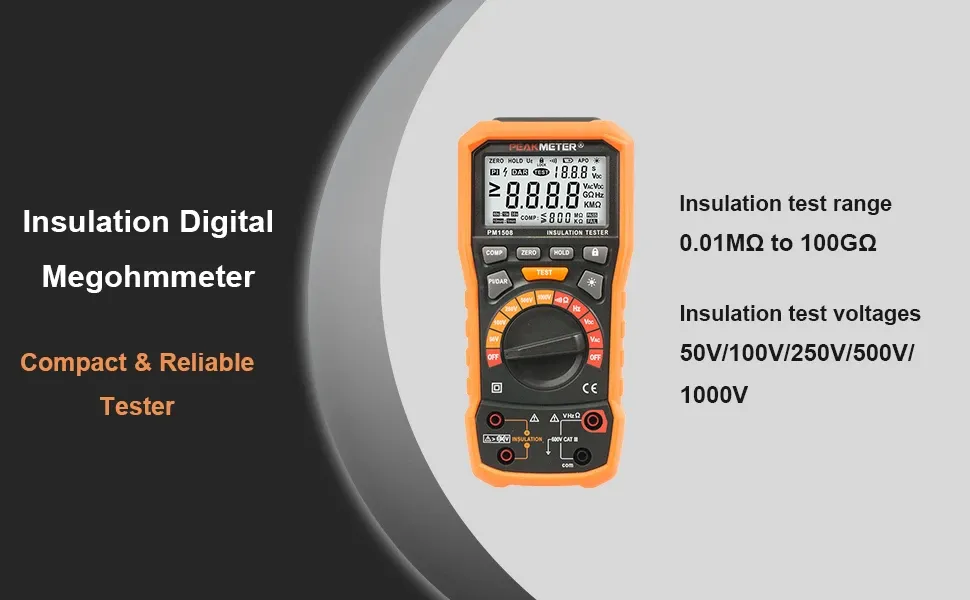
A 100G ohm megger meter is a high-range insulation resistance tester that reads up to 100 GΩ, the headroom you need when a long, healthy cable run or clean switchgear reads far above the 1 MΩ BS 7671 floor. For commissioning it lets you record a real number instead of "over range", compare it against previous or future tests, and do it with selectable 250V/500V/1000V, without paying a flagship-brand premium.
What the 100 GΩ ceiling actually buys you
"Megger" is a brand name that has become shorthand for an insulation resistance tester, much like Hoover for a vacuum. What defines a 100G ohm megger meter is not the badge but the range: the ability to read all the way to 100 gigohms. That matters because sound, dry insulation on a new installation is often extremely high. A basic tester that tops out at, say, 200 MΩ simply displays "over range", which is useless on a handover certificate. High range lets you write down an actual value.
For a contractor commissioning long cable runs and switchgear, that recorded figure is the deliverable. It proves the asset was healthy on the day and gives the client a baseline to trend against.
When high range matters most
- Long cable runs. More cable means more surface for leakage, but healthy runs still read very high; you need the headroom to capture the real number.
- Switchgear and clean new plant. Dry, undamaged insulation routinely reads into the gigohms.
- Baseline records. A precise commissioning value is what makes later trend analysis meaningful.
The frustration with basic testers is real: they top out too early, and arriving under-specified for a commissioning job is exactly what a specification-aware buyer wants to avoid.
Selectable test voltages for specification work
High range is only half the story; you also need the right test voltage. BS 7671 expects 500V DC for circuits up to 500V and 1000V DC above that, so 250V/500V/1000V selectability lets you match each asset while still reading the full resistance. For the detail of which voltage applies where, see the electrical insulation meter guide.
A credible Megger or Fluke alternative
Premium brands such as Megger, Fluke, Kyoritsu and Metrel make excellent instruments, but their cost can be hard to recover on price-sensitive contracts, and much of the premium pays for features a commissioning tester may never use. The value question is simple: do you need the badge, or do you need 100 GΩ range, selectable voltages and reliable readings? Transparent pricing helps, our tester is £119.41 inc VAT (£99.51 ex VAT), a fraction of flagship pricing for the range that matters.
The MegaOhmTes 1000V Digital Megohmmeter Insulation Resistance Tester reads 0.01 MΩ to 100 GΩ, offers 50V-1000V selectable test voltages, includes PI/DAR and AC/DC voltage with frequency, and carries a 12-month UK warranty with UK support, at £119.41. For the timed method behind condition trending, see the PI DAR insulation tester guide; for tracing a specific motor or cable fault, see the motor cable megohmmeter guide.
Honest limits
Range is not everything. Some contracts require on-board data logging or Bluetooth export for reporting, or formal calibration traceability to a UKAS certificate; if yours does, specify a tester that meets that requirement rather than trying to add it later. And a very high reading is not a substitute for a full commissioning process, safe isolation, discharge after testing and correct interpretation still apply.
Frequently asked questions
Do I really need 100 gigohms of range?
For commissioning, often yes. Clean, dry cable and switchgear can read far above the 1 MΩ BS 7671 floor, and a low-range tester simply shows "over range". A 100 GΩ ceiling lets you record an actual figure for the handover certificate and compare it against future tests, which a capped tester cannot do.
Is a 'Megger' the same as an insulation tester?
Megger is a long-established brand whose name is often used generically for insulation resistance testers, in the same way people say 'Hoover'. Any tester that applies a DC test voltage and reads insulation resistance does the same job; what matters is the range, the selectable voltages and the build quality, not the badge on the front.
What test voltage should I use for cables?
Follow BS 7671: 500V DC for standard circuits up to 500V (minimum 1 MΩ) and 1000V DC above that. A high-range tester with selectable 250V/500V/1000V lets you match the voltage to the asset and still read the full resistance.
Ready to try MegaOhmTes?
Shop Now — £119.41